Care for Every Meal
Learn More
Chomp Chomp! Woof, Watching You Eat!
Learn MoreProject Overview
Ingredient Management Plan
Project Description
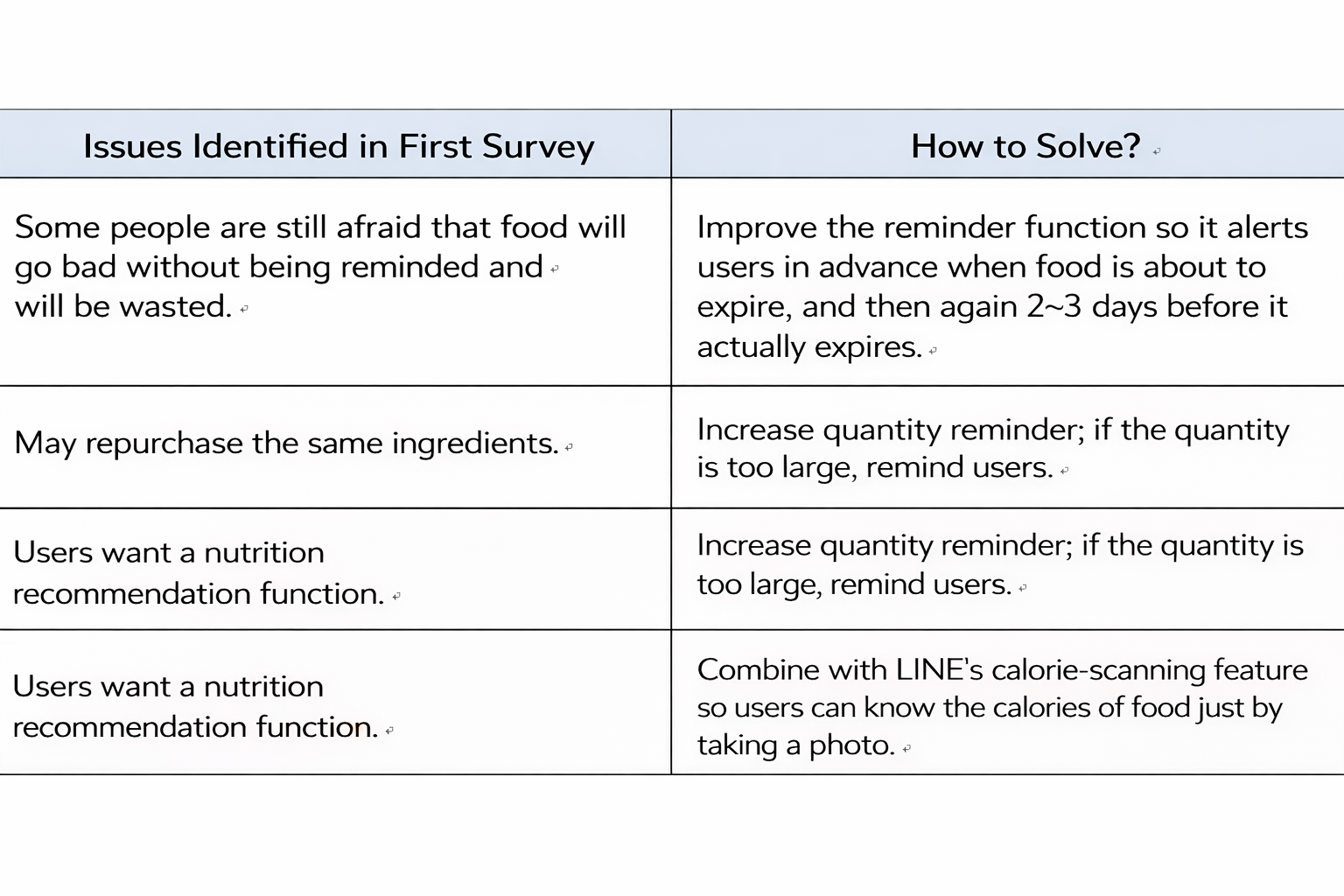
In recent years, food waste at the household level has become an increasingly serious issue. Many ingredients are wasted due to improper storage, expiration, or being forgotten, turning refrigerators into “invisible trash bins.” This not only leads to economic loss but also places a significant burden on environmental sustainability and resource circulation. This study aims to leverage AIoT technologies and image recognition to raise awareness of ingredient management and food waste issues. We propose the “Food Guardian” smart management system as a solution to improve the visibility of refrigerator inventory. By integrating image recognition, LINE notifications, and AI-powered recipe recommendations, the system seeks to reduce food waste, increase ingredient utilization, and enhance the quality of household diets. It also promotes a deeper understanding of Sustainable Consumption and Production (SDG 12). In the long term, our goal is to establish a more comprehensive smart home management ecosystem, ensuring that every ingredient is properly utilized and its value fully respected.
Project Research Overview
Food waste is a global social issue. Many ingredients are discarded due to improper management, expiration, or duplicate purchases, placing a burden on environmental sustainability and household finances. According to the Food and Agriculture Organization (FAO) of the United Nations, approximately one-third of all food produced globally—around 1.3 billion tons—is lost or wasted each year, resulting in economic losses of up to USD 680 billion. In Taiwan, household food waste has also been increasing, reaching approximately 190,000 tons in 2023. This indicates that refrigerators often become “invisible trash bins” due to inadequate tracking of expiration dates. This study aims to leverage AIoT technologies and social engagement to raise awareness of ingredient management and food waste issues. We propose the “Food Guardian” smart ingredient management system as a solution to improve inventory visibility and management efficiency. By integrating image recognition, LINE Bot automated reminders, and AI-powered recipe recommendations, the system helps users accurately track expiration dates and make effective use of available resources. In the long term, the project aligns with the United Nations Sustainable Development Goal 12 (Responsible Consumption and Production), aiming to establish a comprehensive smart home management system where every ingredient is properly utilized and its value fully respected.
Smart Promotion and Management Environment
• Social Media Engagement and Awareness Utilize platforms such as Facebook and Instagram to share insights on food waste issues and real-life applications of “Food Guardian,” raising public awareness of leftover food challenges. • Dedicated Project Website Develop a “Food Guardian” website to provide smart ingredient management information, food preservation education resources, and system design concepts, enabling users to better understand the research process. • Online Interaction and Recipe Community Organize online sharing sessions or build a recipe community where nutritionists share knowledge on leftover food utilization, supported by AI-powered recommendations for personalized dietary planning. • Smart Ingredient Management Platform Through a mobile app and LINE Bot interface, users can easily perform image recognition, inventory tracking, and automated expiration alerts, achieving seamless information management. • Cross-Industry Collaboration and Business Applications Collaborate with fresh food e-commerce platforms, supermarkets, and smart appliance brands to integrate product promotions and logistics services, creating a smart lifestyle cycle from “fridge to table.” • Promoting Sustainable Consumption and Social Impact Leverage data analytics to provide food waste reduction strategies and collaborate with health platforms to promote sustainable diets, aligning with SDG 12 (Responsible Consumption and Production).